IELTS Speaking: what to say when you know nothing about the topic
Handle an unfamiliar IELTS Speaking topic, buy natural thinking time, build an honest answer, and continue without a memorised script.
By English Grader study guides · AI-assisted educational content · Official sources linked below
The short answer
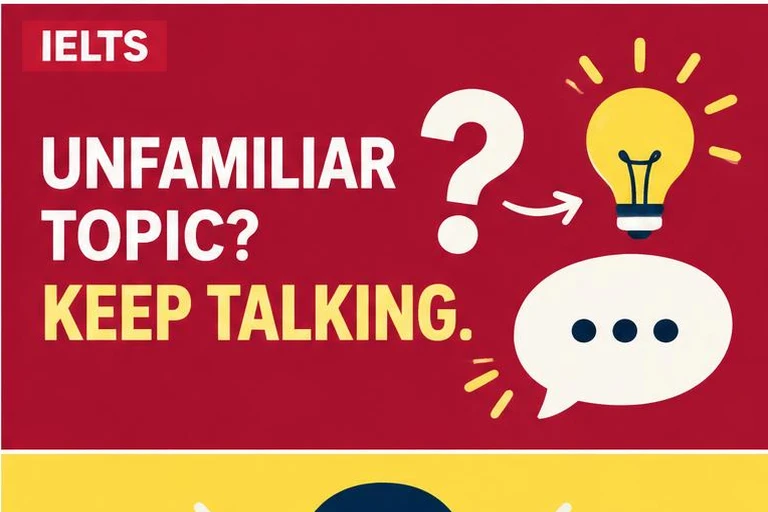
You do not need expert knowledge. Qualify uncertainty, connect the topic to a familiar example, and explain your reasoning clearly.
The test assesses language, not specialist knowledge
It is acceptable to admit limited experience, provided you continue with a relevant thought or example. The examiner is assessing how you communicate.
Related guide: Avoid common Speaking mistakes
Bridge to something you can explain
Give a brief honest qualification, then move to a related experience, observation, or hypothetical example.
Part 3 example
I haven’t thought much about urban farming, but I have seen community gardens in my city. They seem useful because residents can grow some fresh food and meet their neighbours, although they could never supply an entire city.
Use natural thinking phrases sparingly
Short phrases can create a moment to think. Avoid stacking fillers or repeating the question for too long.
- That’s not something I know much about, but…
- My first thought is that…
- A related example might be…
Related guide: Reduce hesitation naturally
Train with questions you did not choose
Random or AI-generated questions help you organise ideas under pressure. Record the first attempt before researching the topic.
Generate a Speaking question →Put this into practice
Generate or choose a Speaking question, record your first response, and use feedback to clarify the next one.
Guest AI tries are limited to one use per feature per day. Sign in for saved progress. AI feedback and band estimates are practice guidance, not official IELTS results.
Official sources and further reading
Practice examples and study routines are illustrative advice, not official band-scored answers or predictions of exam questions.