IELTS Speaking Part 2 practice: cue cards, one-minute plans, and better answers
Practise IELTS Speaking Part 2 with original cue cards, a one-minute planning method, sample notes, and a recording checklist for your two-minute answer.
By English Grader study guides · AI-assisted educational content · Official sources linked below
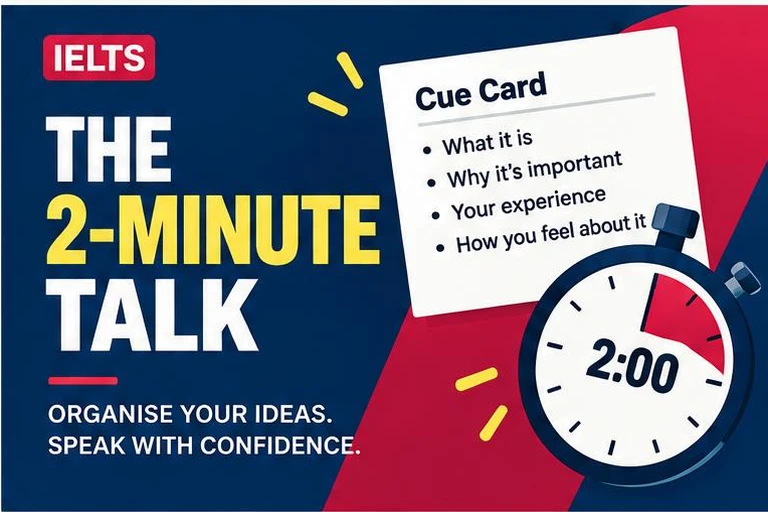
The short answer
Use your preparation minute to collect details, not write a script. Build a small story around the cue card and practise continuing for up to two minutes.
What happens in IELTS Speaking Part 2?
You receive a task card with a topic and points to cover. You have one minute to prepare, with paper and a pencil for notes, and then speak for up to two minutes. The examiner may ask one or two short questions afterwards. This is different from Part 3, which moves into a broader discussion.
The purpose of practice is not to predict your actual exam question. Work with varied people, places, objects, and experiences so you can organise details when a topic is unfamiliar. The cue cards in this article are original practice prompts, not claimed recent exam questions.
How to use the one-minute preparation time
Choose a specific example quickly. Spend the rest of the minute noting keywords for the card’s points, one short event, and your reaction. Full sentences take too long to write and encourage you to read instead of speak.
A useful note sequence is who or what, where and when, what happened, and why it mattered. This is a planning aid rather than an official scoring formula. Check the actual cue card so the structure does not distract you from its instructions.
Notes for ‘Describe a useful skill you learned’
cooking → university kitchen → friend showed me → first soup too salty → tried again → now cook after work → cheaper + independent
Three original cue cards to practise today
Prepare each card for one minute, record a first attempt, then listen before reading any sample answer. Change one detail on your next attempt to practise flexible language instead of memorisation.
- Describe a useful skill you learned. Say what the skill is, when you learned it, who helped you, and explain why it is useful to you.
- Describe a place you enjoy visiting. Say where it is, when you go there, what you do there, and explain why you enjoy it.
- Describe a time you helped someone. Say who the person was, what they needed, what you did, and explain how you felt afterwards.
What to do when your answer runs out too soon
Add a scene, a contrast, or an outcome rather than repeating the same opinion. Describe what happened before the main event, explain a small problem, or compare your feelings then and now. These details give you something meaningful to say.
For the useful-skill card, ‘I learned cooking and it is useful’ can become a short account of your first attempt, the mistake you made, how someone helped, and how you now use the skill. You are expanding the experience, not merely making the sentence longer.
A detail that creates development
At first I relied on instant meals because I did not know how to cook. My friend showed me a simple soup recipe, but I added far too much salt on my first attempt. After trying again, I realised that cooking was less difficult than I had expected.
Review content and delivery separately
First listen for whether the answer is understandable and has a clear thread. Then review its wording and development. A transcript alone cannot fully assess pronunciation, rhythm, or pauses, and a practice AI estimate is not an official band score.
Use feedback to choose one revision target, then try another cue card. Sample answers can show ways to develop ideas, but your own flexible response is a better study goal than learning a script. Create an account if you want to keep a practice record; compare Plans only if you need more daily AI attempts.
Put this into practice
Select Speaking Part 2 in the question bank, make brief notes, and record your own answer for feedback.
Guest AI tries are limited to one use per feature per day. Sign in for saved progress. AI feedback and band estimates are practice guidance, not official IELTS results.
Official sources and further reading
Practice examples and study routines are illustrative advice, not official band-scored answers or predictions of exam questions.