IELTS Speaking Common Mistakes to Avoid
The most frequent IELTS Speaking mistakes candidates make, with practical fixes for each one.
By English Grader study guides · AI-assisted educational content · Official sources linked below
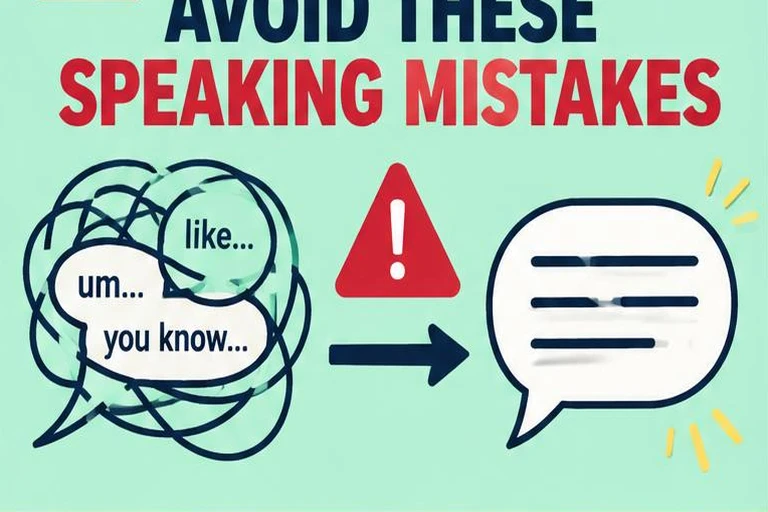
The short answer
Most IELTS Speaking mistakes come from habits like memorised scripts, short answers, or ignoring the question, and each can be fixed with targeted practice.
Relying on Memorised Scripts
Some candidates prepare full answers in advance and try to recite them regardless of the actual question. Examiners are trained to spot this, and it often sounds unnatural or unrelated to what was asked.
The fix is to prepare flexible ideas and vocabulary rather than fixed sentences, so you can respond naturally to whatever is actually asked on the day.
Giving Over-Short Part 1 Answers
A common mistake in Part 1 is answering with just one word or a very short phrase, such as ‘Yes, I do’ without any extension. This gives the examiner little to assess.
Instead, aim to answer the question, then add a brief reason or example, so your response shows more of your language range.
Too short vs extended answer
Too short: 'Yes, I like it.' Better: 'Yes, I really enjoy it because it helps me relax after a long day at work.'
Going Off-Topic in Part 2
During the long turn, some candidates drift away from the cue card and talk about a different, unrelated topic. This can affect how well your answer is judged against the task.
Keep glancing at the cue card prompts while you speak, and structure your answer around each bullet point to stay on track for the full two minutes.
- Read all the bullet points before you start speaking
- Use the one minute of preparation time to jot down key words
- Check your answer covers each prompt before moving on
One-Word Answers and Overusing Idioms
Besides short answers, some candidates swing too far the other way and force in idioms or advanced phrases that do not fit naturally, which can sound odd rather than impressive.
It is better to use natural, accurate language than to force in idiomatic expressions that you are not fully comfortable with, since the examiner values clarity and naturalness over showy vocabulary.
- Only use idioms you are confident using correctly
- Prioritise clear, accurate sentences over complex ones
- Vary your vocabulary rather than repeating the same safe words
Ignoring the Actual Question
Sometimes candidates answer a question they expected rather than the one actually asked, often because they are relying on memorised material. This is noticeable to examiners and affects your score.
Listen carefully to each question, and if you are unsure, it is fine to ask the examiner to repeat it rather than guessing and answering something unrelated.
Practise responding to unexpected questions →Put this into practice
Record an answer with English Grader and get instant feedback on the mistakes you might be making.
Guest AI tries are limited to one use per feature per day. Sign in for saved progress. AI feedback and band estimates are practice guidance, not official IELTS results.
Official sources and further reading
Practice examples and study routines are illustrative advice, not official band-scored answers or predictions of exam questions.