IELTS Speaking Topics Practice List: What to Expect and How to Prepare
A themed list of common IELTS Speaking topics and honest advice on how to practise them without memorising scripts.
By English Grader study guides · AI-assisted educational content · Official sources linked below
The short answer
IELTS Speaking topics repeat in themes rather than exact predictable questions, so practise flexible ideas around common subjects instead of memorising fixed answers.
There Are No Guaranteed Topics
Many websites claim to have the exact questions for an upcoming test date. This is not how IELTS works. Examiners draw from a large bank of themes, and the precise wording changes regularly.
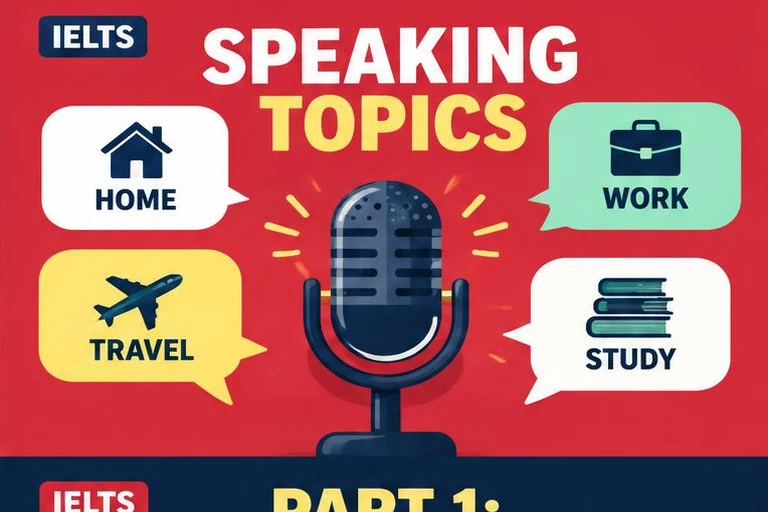
What you can rely on is that certain broad themes come up again and again, such as home, work, study, hobbies, travel and technology. Preparing around these themes is far more useful than chasing a predicted question list.
Treat any ‘leaked questions’ list with caution and focus your time on building flexible, honest answers instead.
Common Themes to Practise
Below are themes that appear frequently across Part 1, Part 2 and Part 3. Practising each one with a few personal examples will prepare you for many possible questions.
Try to have at least two or three ideas ready for each theme, along with simple vocabulary you can adapt on the spot.
- Home and accommodation: where you live, your neighbourhood, future housing plans
- Work and study: your job or course, daily routine, future career plans
- Technology: devices you use, social media habits, how technology has changed daily life
- Travel: places you have visited, holiday preferences, travel in your country
- Food: favourite meals, cooking habits, changes in eating habits over time
How to Practise by Theme
For each theme, write down three or four questions an examiner might ask and answer them aloud without reading from a script. This builds fluency rather than memorisation.
Record yourself and listen back for hesitation, repeated words and grammar slips. Then try the same theme again a few days later with slightly different questions to check you can adapt.
Practising the 'technology' theme
Q: Do you use social media often? A: Yes, I check it most days, mainly to message friends and follow news. I try not to spend too long on it because it can be quite distracting, especially in the evening.
Avoid Memorised Answers
Examiners are trained to notice answers that sound rehearsed or unrelated to the actual question asked. This can lower your score for fluency and coherence, even if the vocabulary sounds impressive.
Instead of memorising full answers, memorise useful phrases and structures that you can plug into many different topics, then adapt them naturally to whatever is actually asked.
- Learn flexible linking phrases, not fixed sentences
- Practise answering unexpected follow-up questions
- Keep your examples personal and specific rather than generic
Build a Weekly Practice Routine
Rather than cramming every theme the night before your test, spread your practice across several weeks, covering two or three themes per session.
Mixing themes regularly, rather than studying one topic repeatedly, better reflects the mixed nature of a real Speaking test and helps you stay adaptable.
Start a themed speaking session →Put this into practice
Try a themed speaking question with English Grader and get instant AI feedback on your answer.
Guest AI tries are limited to one use per feature per day. Sign in for saved progress. AI feedback and band estimates are practice guidance, not official IELTS results.
Official sources and further reading
Practice examples and study routines are illustrative advice, not official band-scored answers or predictions of exam questions.