How to improve from IELTS Band 6 to Band 7 in Writing and Speaking
A focused plan to move from IELTS Band 6 to Band 7 in Writing and Speaking: what changes between bands and how to practise each week.
By English Grader study guides · AI-assisted educational content · Official sources linked below
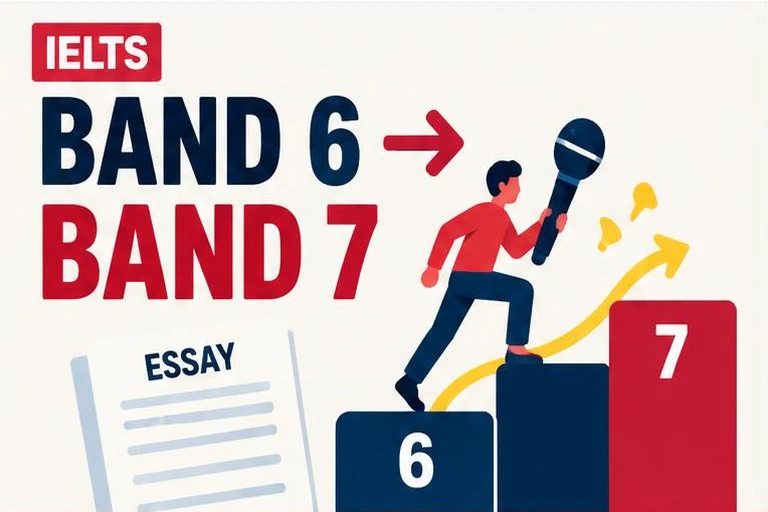
The short answer
Band 7 needs more developed ideas, more precise vocabulary and fewer errors. Target one criterion at a time with regular feedback.
What changes from Band 6 to 7
At Band 6, ideas are relevant but may be underdeveloped, and errors are noticeable. At Band 7, main ideas are extended and supported, vocabulary is more flexible, and many sentences are error-free.
Related guide: Writing band descriptors explained
Writing: develop, then polish
Prioritise explaining your ideas fully before chasing advanced vocabulary.
- Extend each idea with why + example.
- Keep a log of your repeated errors.
- Rewrite paragraphs after feedback.
Speaking: length and flexibility
Speak at length without losing coherence, and paraphrase when you don't know a word.
Record a speaking answer →Related guide: Speaking at Band 7
A weekly routine
Two timed essays, three speaking sessions and daily vocabulary review is a realistic routine for many learners.
Related guide: One-month IELTS study plan
Put this into practice
Write an essay or record a speaking answer and use feedback to choose your next target.
Guest AI tries are limited to one use per feature per day. Sign in for saved progress. AI feedback and band estimates are practice guidance, not official IELTS results.
Official sources and further reading
Practice examples and study routines are illustrative advice, not official band-scored answers or predictions of exam questions.