A One-Month IELTS Study Plan for Writing and Speaking
A realistic four-week plan with daily 30-60 minute sessions covering writing structure, speaking practice, error-fixing and a final mock test.
By English Grader study guides · AI-assisted educational content · Official sources linked below
The short answer
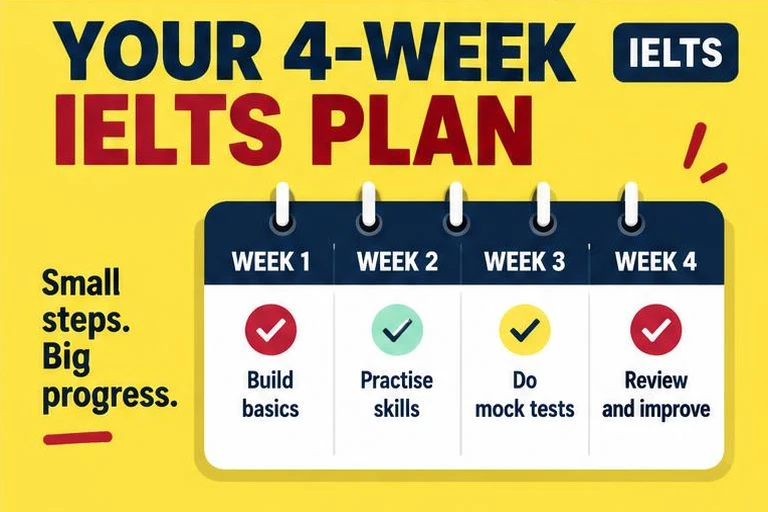
A structured four-week plan with daily short sessions beats occasional long cramming sessions.
Why a structured plan helps
A month is enough time to improve noticeably in both writing and speaking, provided the time is used consistently rather than saved up for last-minute cramming. Short daily sessions of 30-60 minutes are generally more effective than occasional long ones, because language skills build through repeated, spaced practice.
This plan does not promise a specific band score, since results depend on your starting level and how consistently you practise, but it gives a realistic structure for the month.
Week 1: baseline and task types
Start by writing one Task 1 and one Task 2 essay under timed conditions, without preparation, to get an honest baseline. Do the same for speaking by recording yourself answering a few Part 1 and Part 2 questions.
For the rest of the week, study the structure of each task type: what Task 1 reports actually need, how Task 2 essays are typically organised, and what examiners expect in each speaking part.
- Day 1-2: baseline writing and speaking samples
- Day 3-5: study task type structures
- Day 6-7: rewrite your baseline essay using what you learned
Week 2: structure and part-by-part practice
Focus on building essays and speaking answers piece by piece rather than whole attempts every time. Practise writing just introductions, just body paragraphs, or just conclusions for several different questions.
For speaking, practise each part separately: short Part 1 answers, a full two-minute Part 2 talk with notes, and extended Part 3 answers that justify an opinion.
Practise Part 2 speaking answers →Week 3: error-fixing and timing
Review your week 1 and 2 work and look for repeated mistakes, whether that is grammar errors, weak linking words, or running out of time. Spend a few days deliberately targeting whichever issue appears most often.
Start timing everything this week: full 40-minute Task 2 essays, 20-minute Task 1 reports, and speaking answers kept to realistic lengths rather than rambling or cutting off too early.
Targeting a repeated error
If article errors ('a', 'an', 'the') show up in three essays in a row, spend one session specifically reviewing article rules and rewriting sentences from your own essays that got it wrong.
Week 4: mock test and review
In the final week, sit a full timed writing mock (both tasks back to back) and a full speaking mock covering all three parts, ideally on different days so you can review each properly.
Spend the last few days reviewing feedback, revisiting weak areas identified earlier in the month, and doing light practice rather than cramming new material, since rest and confidence matter close to test day.
- Day 1-2: full timed writing mock
- Day 3-4: full speaking mock, all three parts
- Day 5-7: targeted review of remaining weak points
Put this into practice
Write a baseline essay now so you have something concrete to compare your progress against.
Guest AI tries are limited to one use per feature per day. Sign in for saved progress. AI feedback and band estimates are practice guidance, not official IELTS results.
Official sources and further reading
Practice examples and study routines are illustrative advice, not official band-scored answers or predictions of exam questions.