
IELTS Writing Task 1 process diagram: using the passive voice correctly
Learn how to use the passive voice and sequencing words in IELTS Writing Task 1 process diagrams, with examples and common errors.
By English Grader study guides · AI-assisted educational content · Official sources linked below
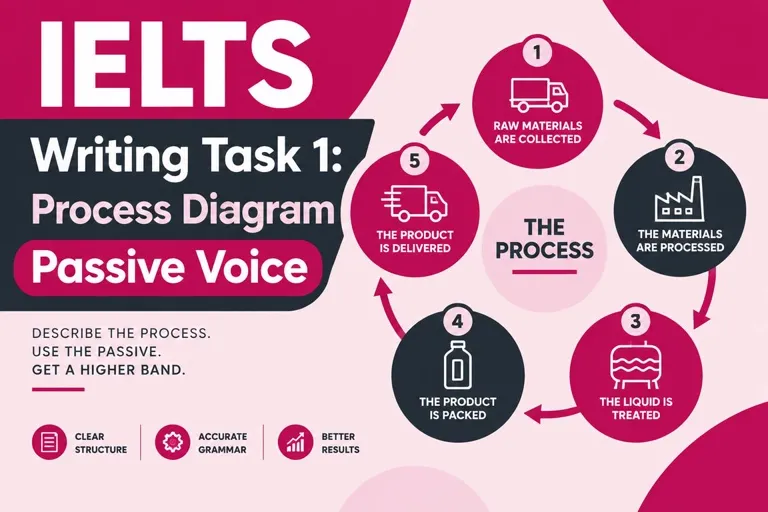
The short answer
Most man-made processes are best described in the present simple passive: 'The clay is shaped and then fired.'
Why the passive
In a manufacturing process, what happens matters more than who does it, so the passive is natural. Natural cycles (like the water cycle) often use the active voice.
Related guide: Full process diagram guide
Forms to use
Combine passive verbs with sequencing.
- is/are + past participle: is heated, are sorted
- after being + past participle: after being washed
- once / after which / at the next stage
- is then transported to…
Try a process question →Example
First, the beans are harvested and dried. After being roasted, they are ground and finally packaged for sale.
Common errors
Watch for these.
- 'is heat' → is heated
- Using the passive for natural cycles
- Repeating 'then' in every sentence
Practise
Write a process report and check the grammar feedback.
Get Writing Task 1 feedback →Put this into practice
Choose a process question from the Writing Task 1 bank, write your report and get feedback on grammar.
Guest AI tries are limited to one use per feature per day. Sign in for saved progress. AI feedback and band estimates are practice guidance, not official IELTS results.
Official sources and further reading
Practice examples and study routines are illustrative advice, not official band-scored answers or predictions of exam questions.