IELTS Writing Task 1 process diagram: structure, passive voice and sequencing
Learn how to describe an IELTS Task 1 process diagram with a clear overview, logical stages, passive voice and sequencing words.
By English Grader study guides · AI-assisted educational content · Official sources linked below
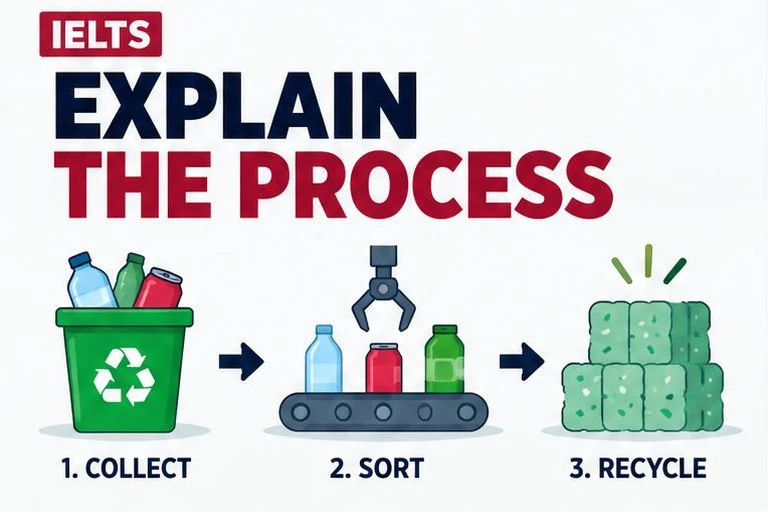
The short answer
Count the stages, state the start and end in the overview, and describe each stage in order using the passive voice where the doer is unimportant.
Read the diagram before writing
Find the first and last stages and count the steps. Decide whether it is a linear process (raw material to product) or a cycle (it returns to the start). This becomes your overview.
Use the passive voice naturally
Processes focus on what happens to the material, so passive forms are usually appropriate. Mix them with some active verbs to avoid repetition.
Example
First, the clay is dug from the ground and passed through a metal grid. It is then mixed with sand and water before being shaped into bricks.
Related guide: Common grammar mistakes to fix
Sequence the stages clearly
Vary sequencing words, but don't put one at the start of every sentence.
- First / To begin with
- Next / Following this / Subsequently
- Once ... has been ...
- Finally / In the final stage
Related guide: Using linking words without overusing them
Check accuracy carefully
Check that no stage is missing and that your verbs agree with their subjects. Compare your report with the diagram and official criteria.
Explore supported IELTS practice →Put this into practice
Use English Grader for Task 2 writing, Speaking Parts 1–3, and vocabulary; Task 1 grading is not currently offered.
Guest AI tries are limited to one use per feature per day. Sign in for saved progress. AI feedback and band estimates are practice guidance, not official IELTS results.
Official sources and further reading
Practice examples and study routines are illustrative advice, not official band-scored answers or predictions of exam questions.