How to paraphrase the IELTS Writing Task 1 introduction (with examples)
A quick method for paraphrasing IELTS Academic Task 1 questions—changing words, structure and time phrases—with ready-to-adapt examples.
By English Grader study guides · AI-assisted educational content · Official sources linked below
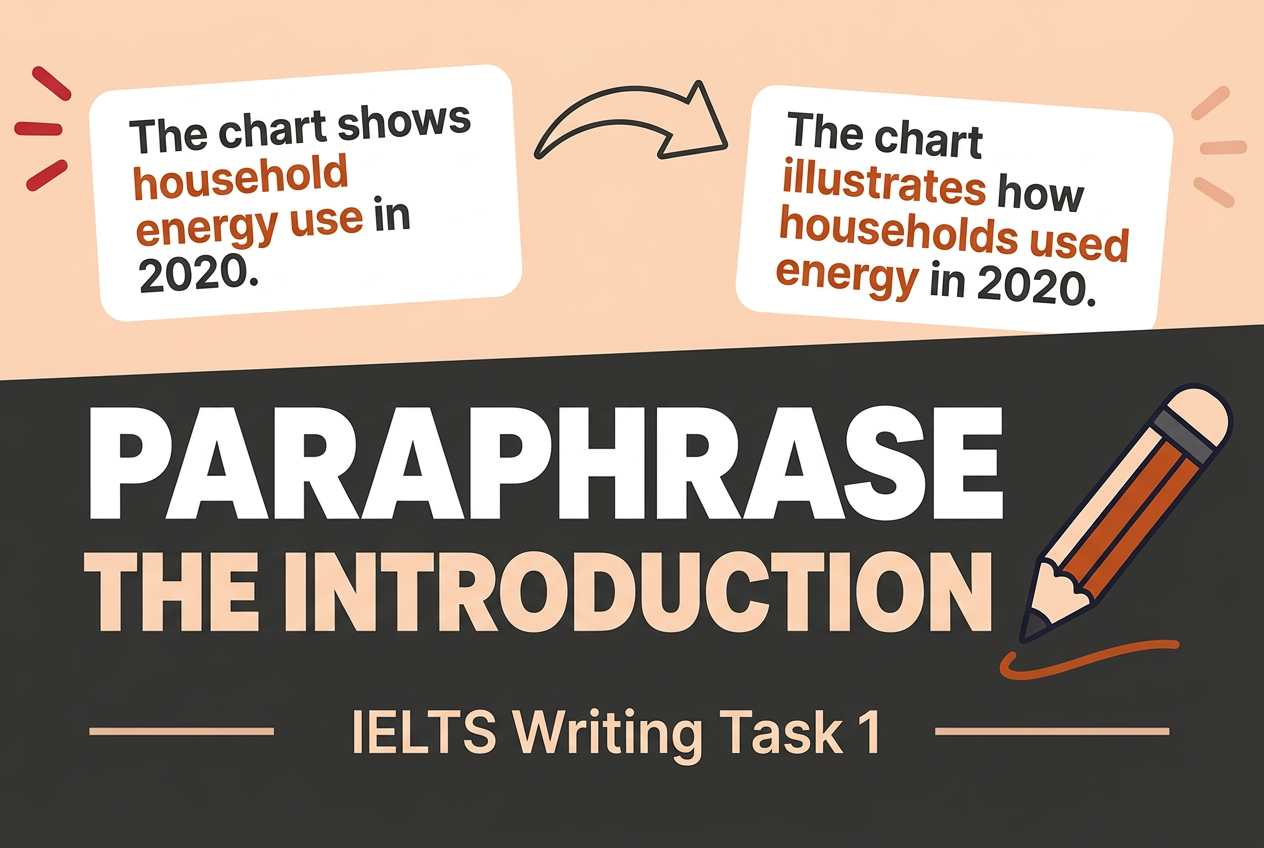
The short answer
Write a one-sentence introduction that paraphrases the question; copied wording isn't counted towards your 150 words.
Three ways to paraphrase
Combine at least two of these.
- Change the verb: shows → illustrates, compares, gives information about
- Change nouns: number of people → how many people, proportion → percentage
- Change time phrases: from 2000 to 2020 → over a 20-year period
Related guide: Learn general paraphrasing skills
Examples
Adapt these to your chart.
Question → Introduction
The graph shows the number of tourists visiting three countries between 2010 and 2020. → The line graph illustrates how many tourists travelled to three countries over a ten-year period. The diagram shows how olive oil is produced. → The diagram illustrates the stages in the production of olive oil.
Mistakes to avoid
Keep it short and accurate.
- Copying the question word for word
- Adding opinions or reasons
- Changing the meaning (e.g. 'percentage' to 'number')
- Putting the overview in the introduction
Put this into practice
Pick any Task 1 question, write your introduction and full report, and check the feedback on paraphrasing.
Guest AI tries are limited to one use per feature per day. Sign in for saved progress. AI feedback and band estimates are practice guidance, not official IELTS results.
Official sources and further reading
Practice examples and study routines are illustrative advice, not official band-scored answers or predictions of exam questions.