IELTS Speaking Parts 1, 2 and 3: format, skills and scoring explained
Compare all three IELTS Speaking parts, learn what each demands, and understand how examiners score the whole interview.
By English Grader study guides · AI-assisted educational content · Official sources linked below
The short answer
The parts need different answer lengths and thinking skills, but your performance is assessed across four criteria—not as three separate scores.
What changes from Part 1 to Part 3?
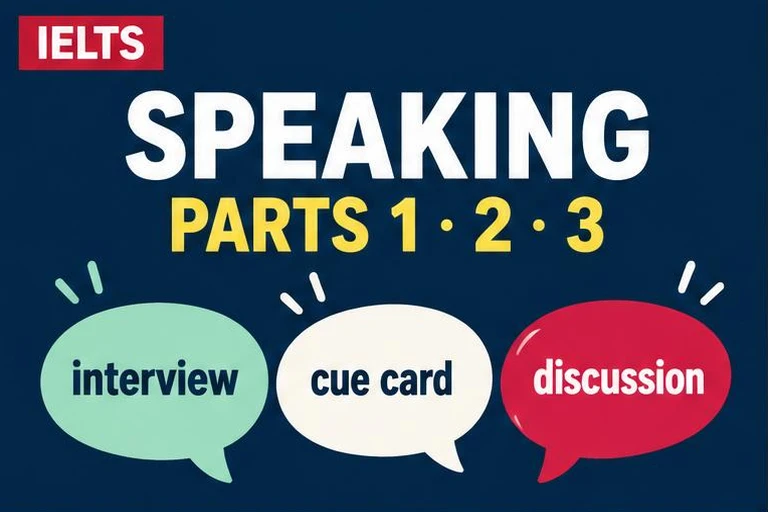
Part 1 uses familiar personal questions, Part 2 asks for a longer individual response, and Part 3 develops a broader discussion.
- Part 1: direct answer plus a detail.
- Part 2: an organised response of up to two minutes.
- Part 3: reasons, comparisons, and qualified opinions.
Related guide: Prepare for Part 2 cue cards
Are the three parts scored separately?
IELTS reports one Speaking band based on Fluency and Coherence, Lexical Resource, Grammatical Range and Accuracy, and Pronunciation across the test.
Related guide: How the Speaking band is calculated
Practise the right response for each part
Rotate through all three parts instead of rehearsing only cue cards. Check that your response fits the question before focusing on sophisticated language.
Choose a Speaking part →Put this into practice
Choose a part, record an answer, and review feedback on development, vocabulary, grammar, and fluency.
Guest AI tries are limited to one use per feature per day. Sign in for saved progress. AI feedback and band estimates are practice guidance, not official IELTS results.
Official sources and further reading
Practice examples and study routines are illustrative advice, not official band-scored answers or predictions of exam questions.