
IELTS Listening Part 4: follow lecture notes without transcribing everything
Prepare for IELTS Listening Part 4 lecture notes by predicting gap types, following signposts and reviewing missed answers with a transcript.
By English Grader study guides · AI-assisted educational content · Official sources linked below
The short answer
Part 4 is an academic monologue. Use the note structure to follow the lecture and listen for the requested details; trying to transcribe every sentence can distract you.
Read the outline as a map of the lecture
Part 4 contains one speaker discussing an academic subject. The headings and notes often reveal the lecture’s progression. Before listening, identify the topic and the kind of information each gap requires. You do not need specialist background knowledge to invent answers; the recording provides the information tested.
Predicting a noun, process or number can narrow your attention, but do not become attached to a specific word before hearing it. The speaker may use a paraphrase of the printed notes. Follow the meaning and the lecture’s structure together.
- Use note headings to locate the current stage.
- Predict grammatical categories rather than exact words.
- Keep listening if one gap is missed.
A worked example: compare meaning with the question
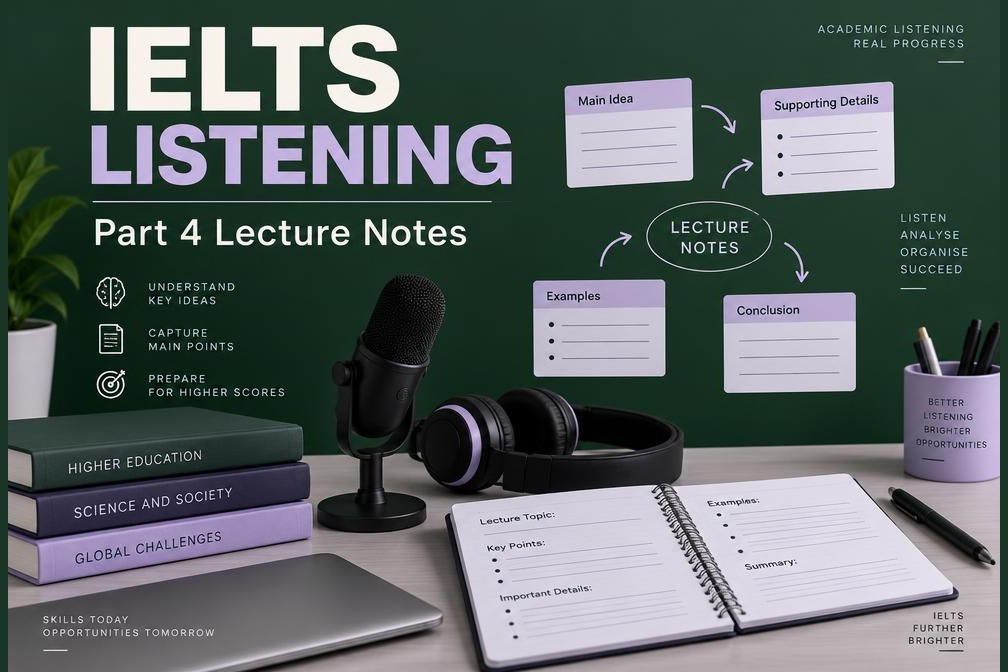
This original illustration explains the decision process. It is not an official IELTS question or a prediction of test content.
Original lecture-note illustration
Notes: Wetlands reduce flooding by storing _____. Speaker: “During heavy rainfall, wetlands hold excess water and release it gradually, limiting sudden flows downstream.” Answer: water, if the task requests ONE WORD ONLY. The printed phrase “reduce flooding” corresponds to “limiting sudden flows”; the full sentence gives the relationship.
Follow signposts without ignoring detail
Phrases introducing an example, a contrast or the next stage can help you navigate. However, a signpost is not itself an answer. Once you know the lecture has moved to a new topic, return attention to the precise detail required by the next gap.
If you lose an answer, use the following heading or recognisable idea to rejoin the lecture. Do not spend the next minute mentally replaying a sentence you cannot recover. During practice review you can replay the recording; in the test you hear it once.
Use the transcript only after a first attempt
Complete an official audio task first, then compare wrong answers with the transcript. Mark the passage that expressed each answer and identify the paraphrase. Listen again without reading, aiming to recognise that connection. Finally explain the lecture’s main idea aloud rather than memorising the transcript as a Speaking response.
Build IELTS vocabulary for your own answers →Apply what you learn in Writing and Speaking
Use useful language from your listening review in your own spoken answer. Record a fresh response, listen back and review development, vocabulary and grammar. Speaking feedback does not replace an official Listening test or answer key.
The tools here provide AI practice feedback and band estimates for Writing and Speaking, not official results. Use a relevant original answer, review a specific weakness and try again. For Reading and Listening tests, use official preparation materials with their audio, passages and answer keys.
Practise IELTS Speaking with feedback →Related guide: IELTS Reading and Listening mistakes: build a useful review routine
Put this into practice
Use the existing Writing, Speaking and Vocabulary tools alongside official Reading and Listening preparation. This site provides educational guides for Reading and Listening, not tests or automated marking for those skills.
Guest AI tries are limited to one use per feature per day. Sign in for saved progress. AI feedback and band estimates are practice guidance, not official IELTS results.
Official sources and further reading
Practice examples and study routines are illustrative advice, not official band-scored answers or predictions of exam questions.