
IELTS Reading time management: when to move on and return
Plan the 60-minute IELTS Reading test, avoid losing time on one question, and practise returning to difficult items without abandoning evidence checks.
By English Grader study guides · AI-assisted educational content · Official sources linked below
The short answer
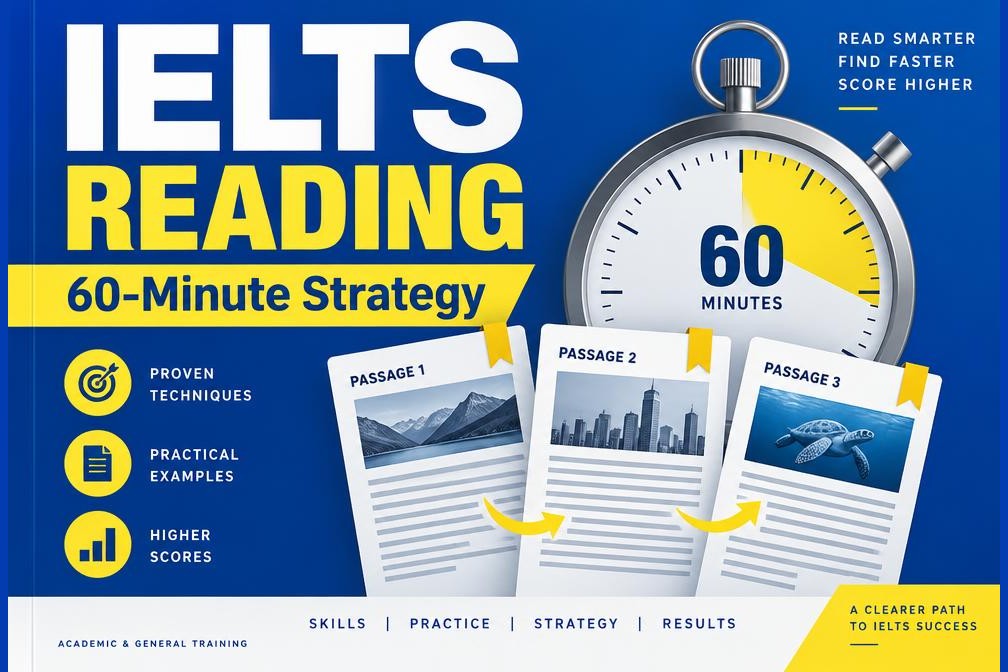
You have 60 minutes for Reading, including entering your answers. Use checkpoints and a return plan; a rigid equal-time split is a practice starting point, not a rule.
Plan around all tasks, not just reading the passages
Reading time includes understanding instructions, locating evidence, selecting answers and entering them. On paper there is no extra transfer period at the end. A learner who completes the passage work at minute sixty but leaves answers only in the booklet has not completed the task safely.
For Academic Reading, roughly twenty minutes per passage can be a useful first practice checkpoint. It is not mandatory, and you may choose a different allocation after observing your own performance. General Training sections differ in structure, so do not assume each section needs identical time.
- Track both elapsed time and unanswered items.
- Enter answers within the available 60 minutes.
- Reserve a short final check if your pace permits it.
A worked example: compare meaning with the question
This original illustration explains the decision process. It is not an official IELTS question or a prediction of test content.
Original practice decision
At a checkpoint, you have answered most questions in a set but cannot locate one detail. Mark that item for return and continue to the next set. When you return, use a locator note such as “Paragraph D, final two sentences” rather than starting a complete reread.
Create a move-on rule from real practice
There is no universally ideal number of seconds for every question. A difficult matching task may legitimately take longer than a straightforward short answer. In practice, notice when you are rereading without gaining evidence. That is a better move-on signal than discomfort with an unfamiliar word.
Keep a visible record of items to revisit. If the test interface allows flagging, use it; on paper make a clear note in the question booklet without confusing your answer sheet. Do not let one uncertain item consume the time needed for a whole later section.
Run a timed and untimed comparison
Complete an official task under time pressure, then finish the remaining items untimed before viewing the key. If many answers become correct with extra time, work on navigation and checkpoints. If they remain wrong, focus on comprehension or task instructions. More speed alone will not fix a misunderstanding of the question.
Build IELTS vocabulary for your own answers →Apply what you learn in Writing and Speaking
Turn useful expressions from your reading into your own sentences, then apply them in an original IELTS Writing response. Reading comprehension and writing performance are different skills, so keep practising both rather than assuming improvement automatically transfers.
The tools here provide AI practice feedback and band estimates for Writing and Speaking, not official results. Use a relevant original answer, review a specific weakness and try again. For Reading and Listening tests, use official preparation materials with their audio, passages and answer keys.
Practise IELTS Writing with feedback →Related guide: IELTS Listening multiple choice: handle long options and paraphrases
Put this into practice
Use the existing Writing, Speaking and Vocabulary tools alongside official Reading and Listening preparation. This site provides educational guides for Reading and Listening, not tests or automated marking for those skills.
Guest AI tries are limited to one use per feature per day. Sign in for saved progress. AI feedback and band estimates are practice guidance, not official IELTS results.
Official sources and further reading
Practice examples and study routines are illustrative advice, not official band-scored answers or predictions of exam questions.