IELTS Computer-Based vs Paper Test: Which Should You Choose?
A practical comparison of computer-based and paper IELTS writing, covering typing versus handwriting, on-screen editing, and how to decide.
By English Grader study guides · AI-assisted educational content · Official sources linked below
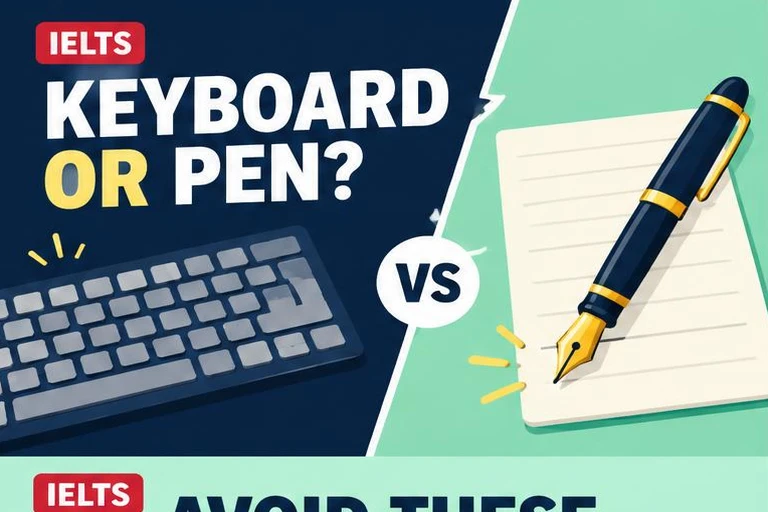
The short answer
Neither format is objectively easier; the right choice depends on your typing speed, handwriting legibility and comfort with editing on screen.
How the formats differ
The content and timing of IELTS writing are the same whether you take the computer-based or paper test: the same two tasks, the same 60 minutes, and the same band descriptors used for marking. The main difference is simply how you produce your answer, typing on a keyboard versus handwriting on paper.
Reading and listening also differ slightly in format between the two versions, but for writing specifically, the practical differences come down to input method, word counting and editing.
Typing speed versus handwriting speed
If you type quickly and comfortably, the computer-based format can save time, since you are not slowed down by forming letters by hand. If you are not used to typing in English, though, unfamiliarity with the keyboard layout or autocorrect behaviour can cost you time instead.
Handwriting speed and legibility matter for the paper test, since examiners need to read your work clearly. If your handwriting tends to become messy when you write quickly under pressure, that is worth testing honestly before deciding.
Editing on screen versus on paper
On a computer, inserting a missed word, deleting a sentence, or reordering text is fast and leaves no visible mess. On paper, the same changes mean crossing out, squeezing text into margins, or sometimes leaving an error uncorrected because fixing it would look messy.
This can matter for candidates who like to plan loosely and revise heavily while writing, since the computer format makes substantial editing easier to do neatly within the time limit.
A mid-essay change
Realising halfway through a paragraph that a stronger example exists is easy to act on when typing, by simply deleting and rewriting the sentence, but on paper it often means crossing a line through text or ignoring the better idea to save time.
The speaking test is unchanged either way
Whichever writing format you choose, the speaking test remains a face-to-face or video interview with an examiner, unaffected by whether you sat a computer-based or paper writing and reading test. Preparation for speaking should be the same regardless of this choice.
It is still worth practising speaking separately and consistently, since it is assessed independently of the writing format decision.
Practise speaking regardless of writing format →How to decide and prepare
A simple test is to write a timed Task 2 essay by hand and another by typing, on different days, and compare both the word count achieved and how comfortable the editing felt. Whichever format let you produce a clearer, more complete essay in the time available is probably the better choice.
Once you choose, practise consistently in that format, since the benefit of choosing the right one is lost if most of your practice happens in the other.
- Try one timed essay by hand and one typed, on separate days
- Compare word count, clarity and how rushed each felt
- Check word-processing features allowed on screen, such as basic cut and paste
- Practise consistently in whichever format you book
Put this into practice
Draft and edit your essay on screen to see whether the computer-based format suits your writing style.
Guest AI tries are limited to one use per feature per day. Sign in for saved progress. AI feedback and band estimates are practice guidance, not official IELTS results.
Official sources and further reading
Practice examples and study routines are illustrative advice, not official band-scored answers or predictions of exam questions.