
IELTS homework feedback for teachers: a reusable assign–review–revise routine
Plan IELTS Writing and Speaking homework with clear prompts, linked students, teacher-reviewed feedback and short revisions that reduce repeated explanations.
By English Grader study guides · AI-assisted educational content · Official sources linked below
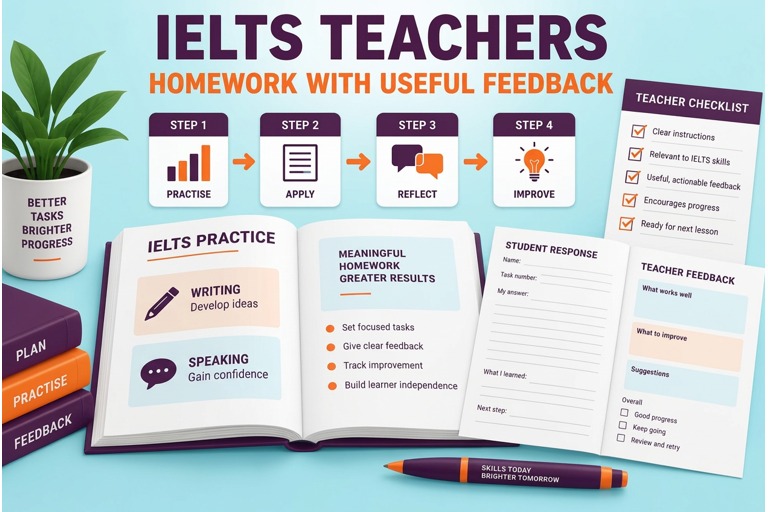
The short answer
Define the task and success target before assigning it. Feedback is easier to review when every submission includes the right question and a clear follow-up action.
Link students before relying on teacher reports
Teachers can create classes with join codes and add students manually with individual claim codes. Make sure each learner is linked correctly before expecting their work to appear in class reports. A class-joining code connects a student to teaching; it is not a checkout discount code or an automatic promise of Premium.
Explain which tool students should use and how you expect work to be submitted. Keep due dates and instructions in your normal classroom communication when needed; do not assume that an automatic deadline reminder or a scheduled homework system is doing this for you.
Set up a class and student roster →Assign one exact question and one skill target
Include the full question, task type, expected timing and learning goal. For Academic Task 1, provide the actual visual. For Task 2, include every instruction. For Speaking, state the part and question so the response can be interpreted appropriately.
The app supports textbook-linked work with page references and saved-question reuse in teacher workflows. Use only material you have permission to share. A page number helps organise an assignment, but it is not a substitute for a legible task where the grading needs the source.
Illustrative homework instruction
Writing Task 2: discuss both views and give your opinion on online learning. Write a timed first draft. Your target is to explain the reason behind each main claim. Submit the exact question with your essay, then revise one paragraph after feedback.
Separate automated analysis from teacher feedback
AI can help draft comments and band estimates; teachers still need to review the original response. Use the grading queue to organise pending work and save your own band and feedback. Do not tell students that generated comments remain private until release unless your actual workflow guarantees that.
For student-visible feedback, name one successful choice and one priority. Keep private planning observations in private teacher notes rather than mixing them into a comment intended for the learner.
Review homework in teacher grading →Make the revision small enough to complete
Instead of requiring a full rewrite after every assignment, ask for a revised overview, one developed paragraph or a new Speaking answer using the same skill. Then ask the student to explain the change in a sentence. This helps distinguish understanding from copying.
Keep the first attempt so you can compare it with the revision. The useful outcome is visible improvement in the target skill, not simply a longer answer or a different AI estimate.
Related guide: Review homework progress with evidence
Check access and allowances before scaling the routine
Teacher tools require a teacher account. Students can try public practice, while saved progress requires sign-in and AI usage has limits. Check the current Plans page rather than assuming every student has the same daily allowance.
If you have an owner-issued class Premium access code, follow the site's redemption process and confirm eligibility. A normal join code alone does not grant paid access. Start with one complete homework cycle before choosing more usage for the class.
Check current IELTS practice plans →Put this into practice
Link students to your class, keep questions and submissions organised, and build a homework routine that fits your teaching.
Guest AI tries are limited to one use per feature per day. Sign in for saved progress. AI feedback and band estimates are practice guidance, not official IELTS results.
Official sources and further reading
- IELTS: Writing key assessment criteria
- IELTS: Academic Writing test format
- IELTS: Speaking band descriptors
- British Council: Speaking practice tests
Practice examples and study routines are illustrative advice, not official band-scored answers or predictions of exam questions.